
NH3Process specializes in ammonia plant revamps that increase production and improve energy efficiency while strengthening reliability. Our rigorous process studies identify bottlenecks, inefficiencies, and improvement opportunities, then translate them into practical, innovative, and smart revamp flowsheets. With extensive experience supporting major operators, we deliver optimized designs that maximize production, reduce energy consumption, and significantly improve CO2 sustainability to meet environmental expectations.
Our Services
Smart Plant Revamps & Process Studies
Our flowsheets are engineered to be economically feasible and technologically viable;
independent of licensors’ technologies. Our services include:
Feasibility & Process Design
Optimized design and development of flowsheets for new grassroots and revamp ammonia projects from concept to commissioning.
Debottlenecking & Energy Optimization
Evaluate current plant operations and develop revamp options to boost production and reduce energy consumption, and hence improving CO2 sustainability.
Technical Monitoring Program
Regular plant assessments to track performance trends, support maintenance planning, and ensure efficiency and reliability.
Process Audits
Detailed performance review of key process units to identify deviations and recommend corrective actions.
Owner’s Consultant
Independent expert support to review licensors’ packages, to further optimize flowsheets, meeting project and owner’s objectives
Commissioning & EPC Support
Process support from engineering to startup, including HAZOP, 3D reviews and guarantee compliance.
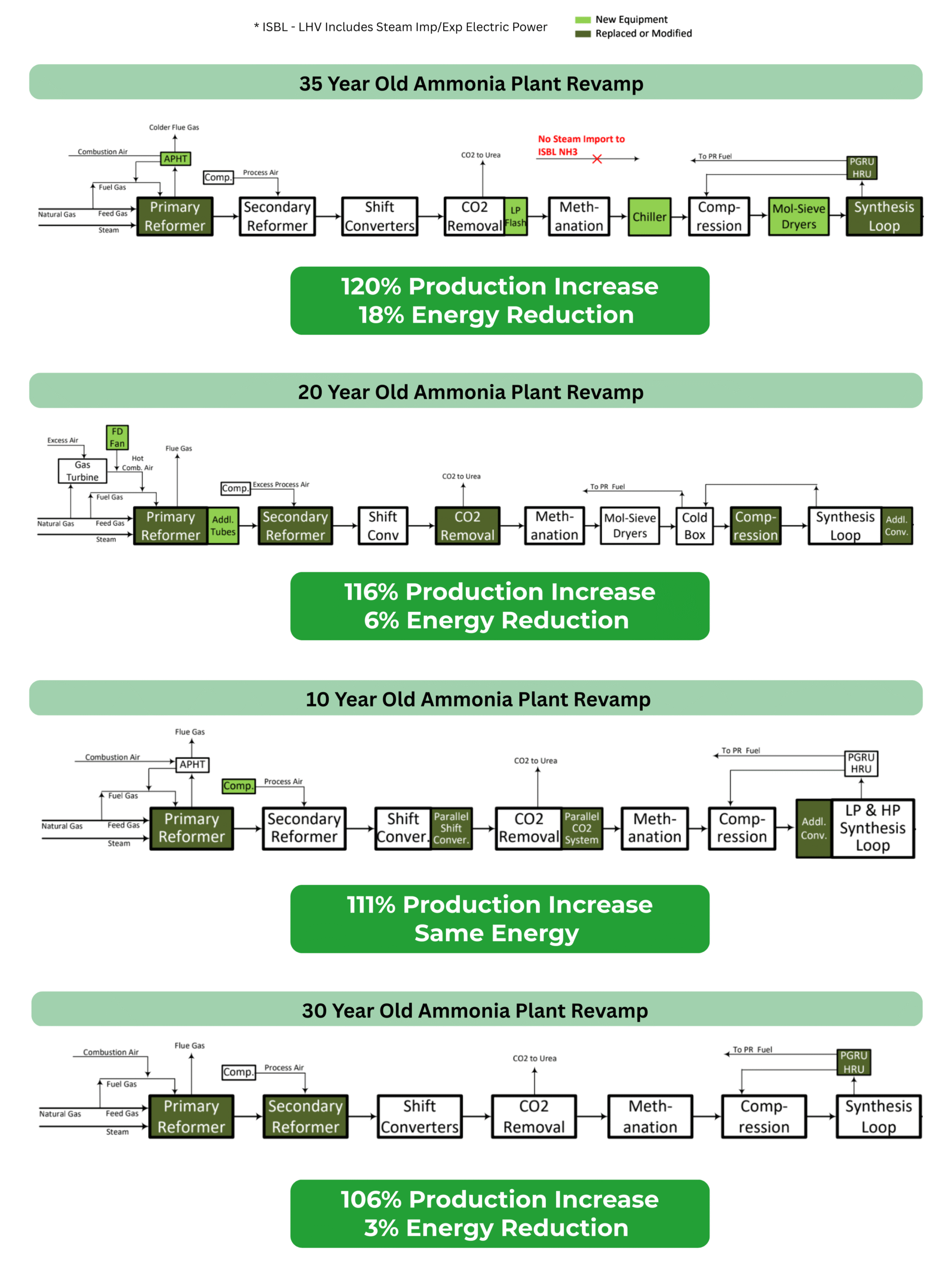
revamp projects examples
Production & Energy Improvement Solutions
Green & Blue Ammonia Production
NH3Process has extensive experience in developing and designing flowsheets for both green and blue ammonia production technologies.
In green ammonia production, ammonia is synthesized using green hydrogen and nitrogen, typically sourced from electrolysis of water and air separation units powered by renewable energy. The ammonia synthesis loop is carefully designed to accommodate fluctuations in green hydrogen and nitrogen supply, ensuring operational stability and efficiency.
In low-carbon and blue ammonia production, the plant design is configured to maximize CO₂ capture from the process side or from both, process and the flue gases. Captured CO₂ is then compressed and sequestered or alternatively utilized in the production of chemicals and materials, supporting long-term carbon containment.
- Maximize CO₂ capture from both, the process and flue gas sides, and maximize use of renewable electric power
- Ensure compliance with blue ammonia certification requirements
- Incorporate design flexibility to accommodate renewable feedstock variability in green ammonia projects